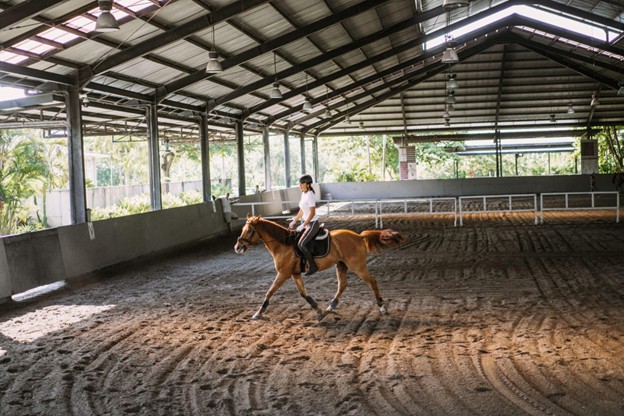
In equestrian sport, consistency is often the defining factor between progress and stagnation. Freddie Vasquez Jr. demonstrates a controlled, private training approach that prioritizes focus, structure, and individualized attention over scale. While talent, experience, and access to quality horses all play important roles, the training environment can have an even greater long-term impact.
In contrast to larger, high-traffic facilities, private training environments are designed to reduce noise, both literal and figurative, allowing for a more refined and consistent development process.
Fewer Distractions, Greater Focus
One of the most immediate advantages of a private training setting is the reduction of distractions. In larger barns, there are constant variables: multiple riders in the ring, shifting schedules, and varying levels of activity.
In a private environment:
- Training sessions are more controlled and intentional
- Riders can focus without competing for space or attention
- Horses are less exposed to unnecessary stress or overstimulation
- The overall atmosphere supports concentration and repetition
This clarity allows both horse and rider to engage more deeply in each session, leading to better retention and execution.
Individualized Training That Adapts Over Time
Consistency is not just about repetition, it’s about repeating the right things. Private training environments make it easier to tailor programs to the specific needs of each rider and horse.
This process includes:
- Adjusting training plans based on daily performance and condition
- Identifying and correcting small inefficiencies early
- Allowing more time for focused skill development
- Avoiding a one-size-fits-all approach
With fewer athletes to manage at once, coaching becomes more precise, and progress becomes more measurable.
A Controlled Environment for Horse Development
Horses, like riders, respond to their surroundings. A calm, structured environment plays a significant role in how they learn, behave, and perform.
Private facilities support these goals by:
- Maintaining consistent routines
- Reducing exposure to chaotic or unpredictable settings
- Allowing horses to develop confidence at a steady pace
- Minimizing unnecessary stress that can impact performance
Over time, such an approach leads to more reliable behavior both in training and competition settings.
Consistency in Schedule and Structure
Routine is one of the most important elements in equestrian training. In larger operations, schedules can shift frequently due to the number of riders and logistical demands.
Private environments offer:
- More predictable daily schedules
- Consistent training times and workloads
- Better balance between work and recovery
- Fewer disruptions to established routines
This stability supports long-term development and helps maintain both physical and mental consistency.
Higher Quality Feedback and Communication
In a smaller, more focused setting, communication between coach and rider becomes more direct and effective.
This allows for:
- Immediate feedback during training sessions
- Clear communication of expectations and adjustments
- A deeper understanding of rider habits and tendencies
- Stronger alignment between training goals and execution
When feedback is consistent and specific, improvement becomes more efficient.
Stronger Horse and Rider Connection
The relationship between horse and rider is central to performance. A private training environment provides the space and time needed to develop that connection without unnecessary interference.
This leads to:
- Better communication through subtle cues
- Increased trust between horse and rider
- Greater awareness of each other’s responses
- More consistent performance under pressure
This connection is often what separates technically skilled riders from truly effective ones.
Reduced External Pressure
Large training environments can introduce external pressures competition between riders, distractions from observers, and varying levels of intensity.
Private settings help minimize this by:
- Creating a more focused and supportive atmosphere
- Allowing riders to progress at their own pace
- Reducing comparison with others
- Encouraging long-term development over short-term results
This shift in focus supports more sustainable growth.
Attention to Detail That Drives Results
Consistency is often built on small details: positioning, timing, balance, and communication. These details are easier to refine in an environment where they are not overlooked.
Private training allows for:
- Repetition of specific movements until they are refined
- Close observation of both horse and rider mechanics
- Immediate correction of minor issues
- A deeper focus on fundamentals
Over time, these small improvements compound into significant performance gains.
Why Environment Ultimately Shapes Outcomes
While skill and effort are essential, the environment in which they are developed plays a critical role in determining outcomes. Private training environments create conditions where consistency can be built deliberately rather than left to chance.
They provide:
- Stability in routine and structure
- Clarity in communication and expectations
- A focused space for both horse and rider to improve
- The ability to adapt training based on real-time needs
These factors collectively contribute to more reliable and repeatable performance.
Final Thoughts
Consistency in equestrian sport is not accidental; it is the result of controlled, intentional development over time. Private training environments offer the structure, focus, and adaptability needed to support that process.
By reducing distractions and emphasizing individualized attention, they create a setting where both horse and rider can progress with greater clarity and purpose. In the long run, it is this consistency that defines success not just in competition but in overall development.