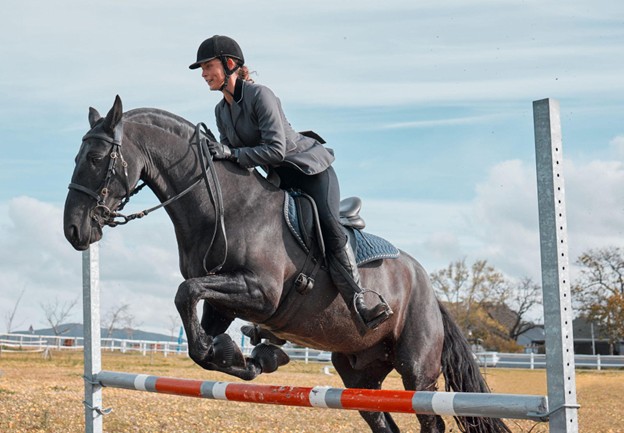
At a glance, equestrian performance is often judged by visible outcomes: clean rounds, speed, and final placings. Freddie Vasquez Jr. reflects a level of riding where success is shaped by skill and attention to detail that most people overlook.
At higher levels of competition, the margin for error becomes tiny. Consistent riders are separated from the rest by a subtle focus on elements that influence every aspect of performance, rather than dramatic technique, which casual observers may overlook.
Precision Over Power
One of the most common misconceptions in riding is that stronger or more aggressive input leads to better results. At higher levels, the opposite is often true.
Experienced riders prioritize:
- Accuracy in movement rather than force
- Subtle adjustments instead of exaggerated cues
- Maintaining balance instead of overcorrecting
- Letting the horse respond rather than forcing outcomes
This level of precision allows for smoother communication and more consistent execution, especially in technical courses.
The Quality of Every Transition
Transitions between gaits, speeds, or movements are often overlooked, but they play a critical role in overall performance.
High-level riders focus on:
- Smooth, controlled changes in pace and direction
- Maintaining rhythm through each transition
- Preparing the horse before asking for a change
- Avoiding abrupt or reactive adjustments
Clean transitions create flow, and harmony leads to consistency throughout a round.
Balance Before Everything Else
Balance is one of the most important and least visible elements of riding. It affects how the horse moves, how it responds, and how efficiently it performs.
This practice includes:
- Keeping both horse and rider centered and aligned
- Adjusting position based on movement and terrain
- Ensuring weight distribution supports the horse’s motion
- Maintaining stability even under pressure
Without balance, even technically correct riding can break down quickly.
Awareness of Rhythm and Timing
Rhythm is the foundation of effective movement. High-level riders are constantly aware of timing, when to ask, when to wait, and when to adjust.
They focus on:
- Maintaining a consistent pace throughout the course
- Recognizing when rhythm begins to shift
- Making adjustments early rather than reacting late
- Aligning their cues with the horse’s natural movement
This awareness creates a more seamless and controlled performance.
Reading the Horse in Real Time
At advanced levels, riding becomes less about directing and more about responding. Horses communicate constantly through movement, tension, and behavior.
Experienced riders pay attention to:
- Subtle changes in energy and responsiveness
- Signs of hesitation or discomfort
- Shifts in focus or attention
- The horse’s natural tendencies in different situations
This ability to read the horse allows for quicker, more effective adjustments.
Consistency in Small Details
What often separates top riders is not a single standout skill, but consistency across small details. These details may seem minor individually, but together they shape overall performance.
Examples include:
- Maintaining proper position at all times
- Keeping hands steady and controlled
- Using legs and seat with precision
- Staying mentally focused throughout the ride
These habits are developed through repetition and attention, not shortcuts.
Mental Discipline and Focus
High-level riding requires a strong mental approach. Distractions, pressure, and unexpected situations are all part of competition.
Riders manage this by:
- Staying focused on process rather than outcome
- Maintaining composure under pressure
- Resetting quickly after mistakes
- Approaching each ride with clarity and intent
Mental discipline often determines how effectively a rider can apply their physical skills.
Preparation Beyond the Arena
What happens outside of competition plays a major role in performance. High-level riders understand that preparation is continuous.
This includes:
- Consistent training routines
- Attention to the horse’s condition and recovery
- Reviewing performance and identifying areas for improvement
- Maintaining discipline in all aspects of preparation
Success is built long before stepping into the arena.
Understanding That Less Is Often More
One of the defining characteristics of experienced riders is restraint. Instead of doing more, they often do less but with greater precision.
This mindset involves:
- Trusting the training already in place
- Avoiding unnecessary corrections
- Allowing the horse to perform without interference
- Focusing only on what is necessary in the moment
This approach creates a more natural and effective partnership.
Why These Details Make the Difference
At higher levels, everyone has access to strong horses and solid fundamentals. What separates riders is how well they manage the details that are easy to overlook.
These include:
- Timing
- Balance
- Communication
- Consistency
- Awareness
Individually, they may seem minor. Collectively, they define performance.
Final Thoughts
What high-level riders focus on often goes unnoticed, but it is precisely these subtle elements that create consistent results. The difference is not always visible in a single moment; it becomes clear over time, through steady performance and controlled execution.
By paying attention to the details that don’t show up immediately, riders build a foundation that supports long-term success. In the end, it’s not about doing more, it’s about doing the right things, consistently, with purpose.